


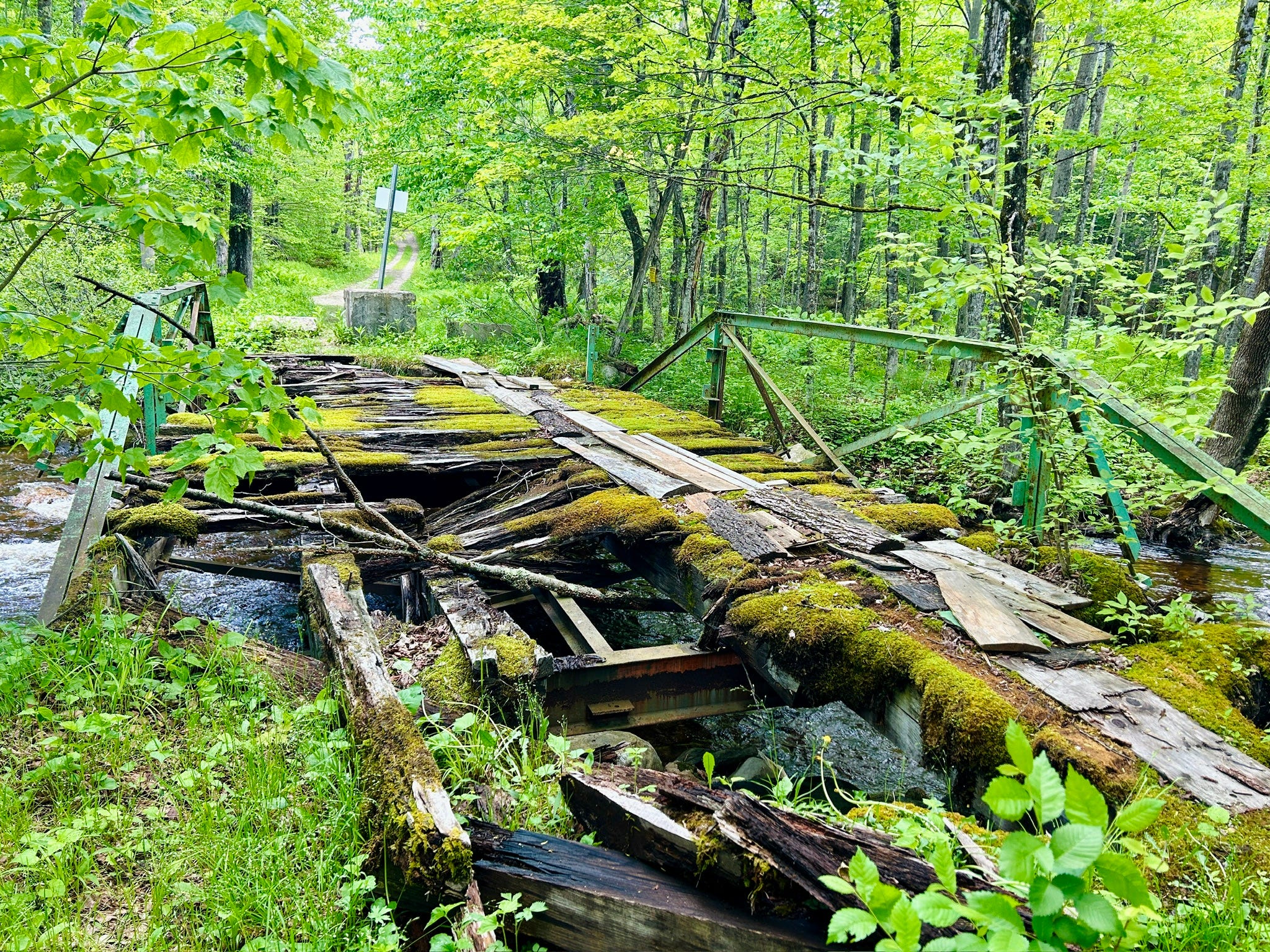
Last weekend I journeyed into the Berkshires with my younger son to visit my friend, Ruth. She lives in a magical little nook on a mountain replete with car sized boulders and lush green ferns. While my younger son stacked three cords of wood, we took a walk down her road, which dead ends into a decaying bridge. I’m a bridge enthusiast, so I was THRILLED to see this moss-covered, half-rotted, gorgeous metal beast up close. It was a reminder that for change to occur, the old must die—but that falling apart doesn’t have to be ugly and cruel. Decay is normal, and change can be beautiful.
This installment of Mel’s Notebook is emailed to paid subscribers every Thursday at 9AM EST. If you would also like to receive it by email, become a paid subscriber and earn access to my full archives along with my undying gratitude!
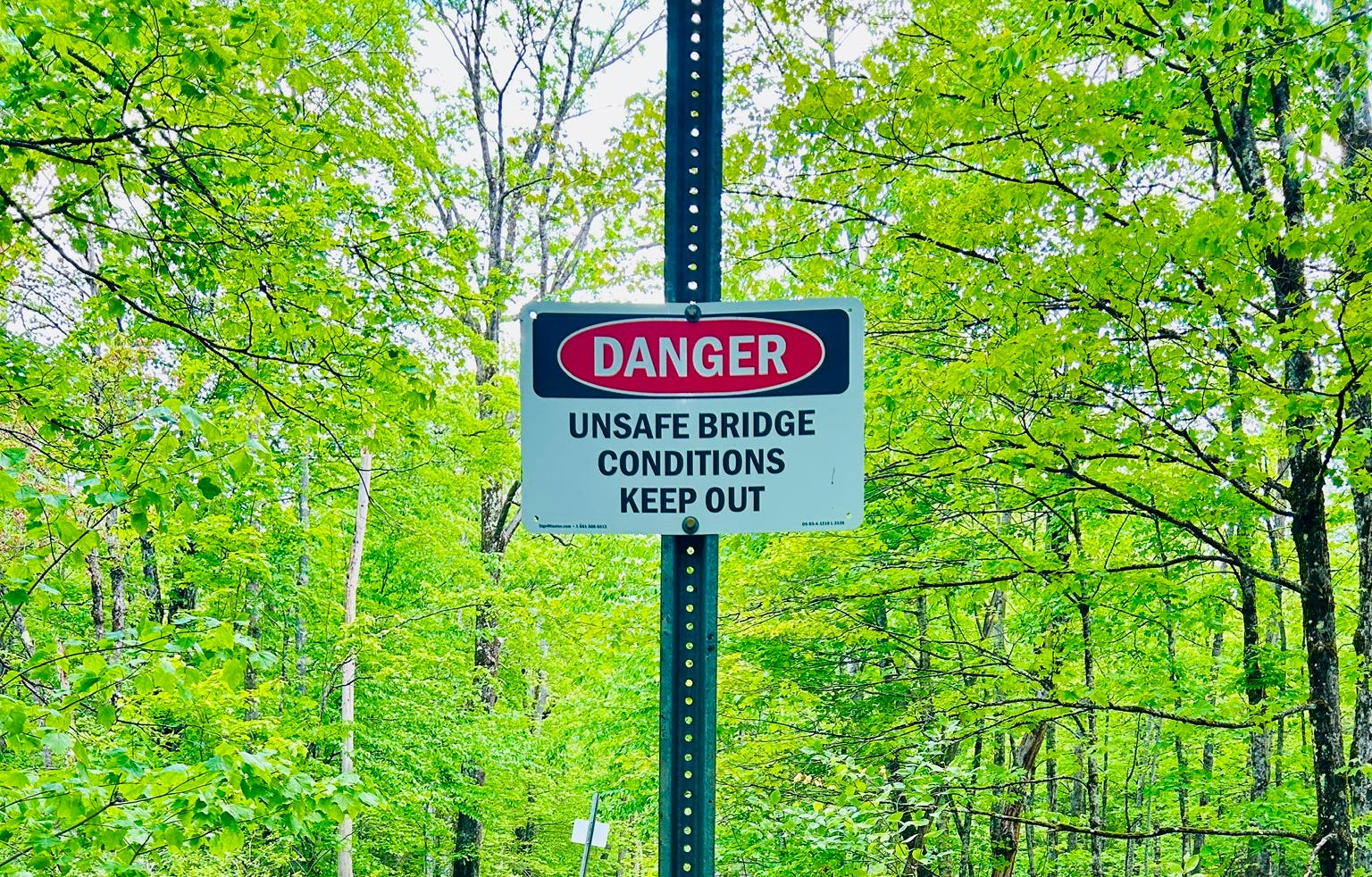
Many people look at a bridge like this and see something dangerous. It’s unstable. The boards are rotted. The path is untrustworthy. And yet, it’s beautiful. Just look at how thick that moss is. The greens are so soft next to the splintered remains of the wood. Instead of a violent shift, the old gives way to the new with softness and dignity. The collapse happens gently, in slow-motion, a change measured in decades, not minutes.
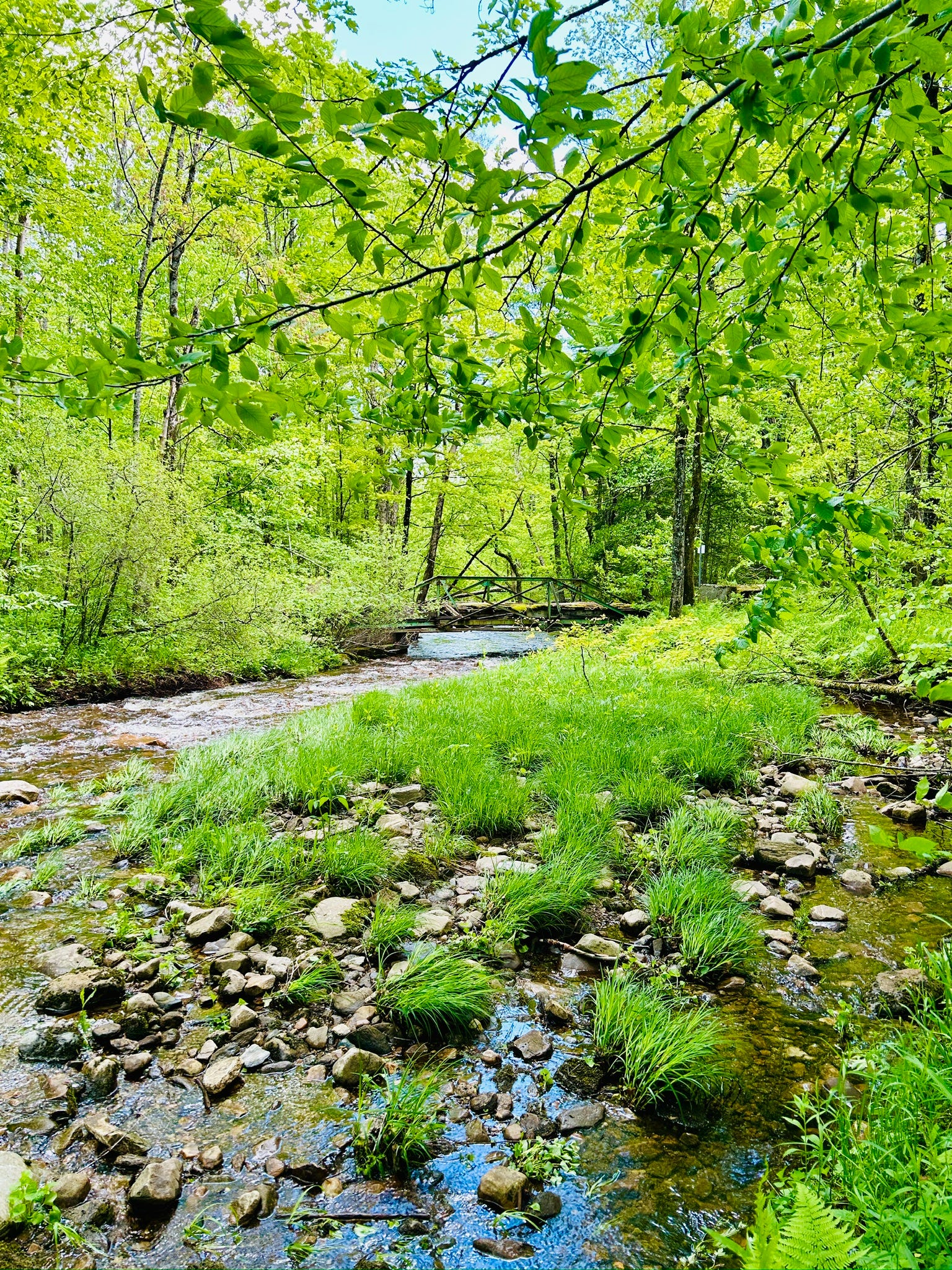
Viewed from a distance, the bridge seems to be fading into the background, like the forest is slowly absorbing it and restoring nature to the way it used to be. For anyone needing a way across, this is scary. What will come next? How will we find another solution? We don’t know at this point. We are asked to be patient, to trust in the process—but it’s not easy, inhabiting a moment of collapse. When life is uncertain, change becomes threatening. People lash out. They over-react. They live in fear.
This is when it’s essential to ground yourself. People use this phrase a lot, but it took me a LONG time to understand what it means. Grounding yourself is not just a catch phrase; it’s a technique rooted in science and spirituality that brings you back to the here and now when you are trapped in fearful thinking. When our fear centers are activated, our brains produce chemicals that are intended to help us survive, but we’re not supposed to live in a state of emergency all the time. We need peace to thrive, and grounding ourselves can help us find it. Here are my favorite grounding techniques:
