


In 2022, my family’s health insurance cost over $20,000 a year. Yes, that was the price on the Affordable Care Act. Yes, it was the cheapest insurance in New Jersey. Yes, we paid it because what other choice did we have? And yet, I know that’s a big part of why we never had an extra dollar all those years. Now, with Medicaid under attack, I don’t know what will happen to my family’s state-sponsored healthcare. Luckily, I live in Massachusetts now, where they’re committed to healthcare for all. But still, it’s REALLY STRESSFUL living through these times, and we do not have to hide it.
This installment of Mel’s Notebook is emailed to paid subscribers every Thursday at 9AM EST. If you would also like to receive it by email, become a paid subscriber and earn access to my full archives along with my undying gratitude!
A common bit of advice about fiction writing is not to write a character who is too much like you. This is what we advise at The Novelry because a character who is too close to your own personal identity can be challenging to mold in the ways that would suit the story best. When we write real people, we tend to stick to facts. And in fiction, that usually makes for a pretty boring story. Fiction is not like reality. Fiction is entertainment! But that doesn’t mean your characters shouldn’t be anything like you. They will often share some of your values, experiences, and challenges. Their demographics may not match yours, but their hopes, dreams, or fears could.
Psychologically, it’s a good thing to relate to your character. Often, my characters take on aspects of my own personality, but because they’re in middle school, they remain safely rooted in their unique identities despite having some things in common with the author. It’s no surprise that my characters are typically anxious. Anxiety is a factor in my life, so it comes through in my characters quite naturally. They act like anxious people because I AM AN ANXIOUS PERSON. That’s the lens I see the world through.
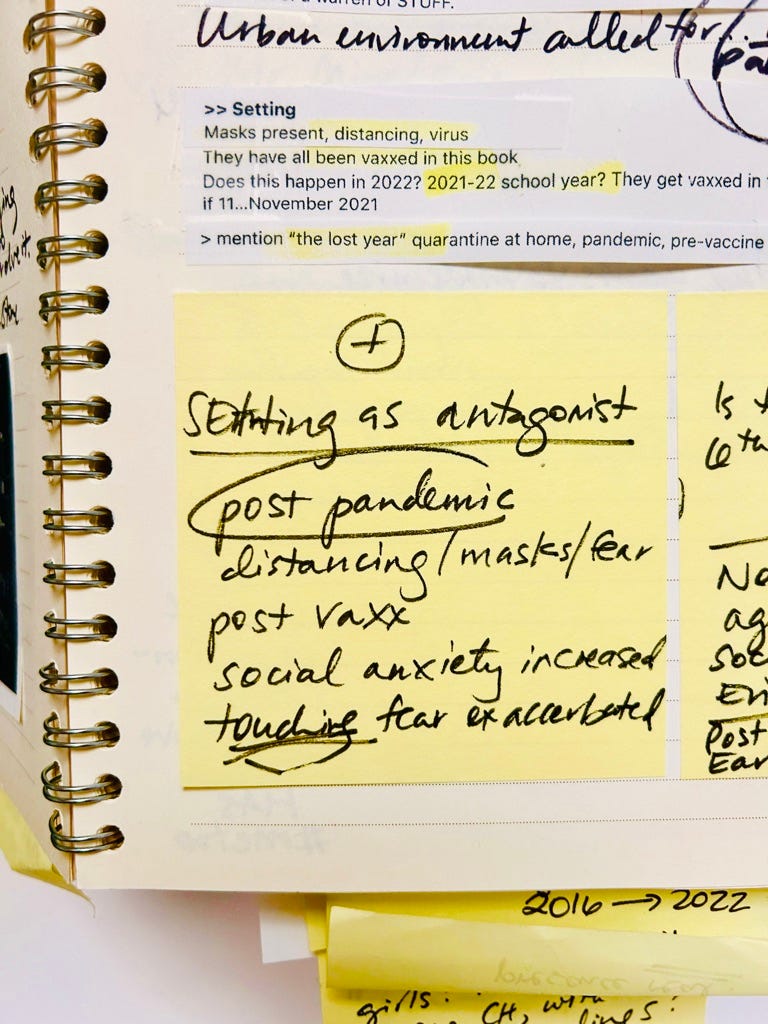
Instead of shying away from my own challenges with anxiety, I use fiction to explore it. In each of my books, my characters are anxious, but in different ways. My first book was about a girl dealing with the social anxieties of starting over at a new middle school in a brand new city with zero friends. The second book shifted the focus to a character with an intense need to control the world around her after the trauma of a family tragedy. Max in A Perfect Mistake exhibits the anxiety commonly found in people with ADHD, who suffer so much negative feedback over the course of their lives that they become very justifiably sensitive to feedback. Even my picture book touched on the theme of anxiety as the protagonist struggles with waiting.
In my latest book, Crushed, I wrote about a girl who’s dealing with the post-quarantine fallout of living through the Covid-19 pandemic in New York City. Why did I write a world that includes the pandemic? Because I have FEELINGS about what we all went through (and are still going through) and I needed to explore them in my work. Many creators question whether or not to acknoweldge the pandemic in their stories, and honestly it’s just a choice. You can write a story that reflects what we experienced here in the real world, or you can write a world free from that element because you’d like your story to be an escape for readers. Both approaches are valid. Both are needed.
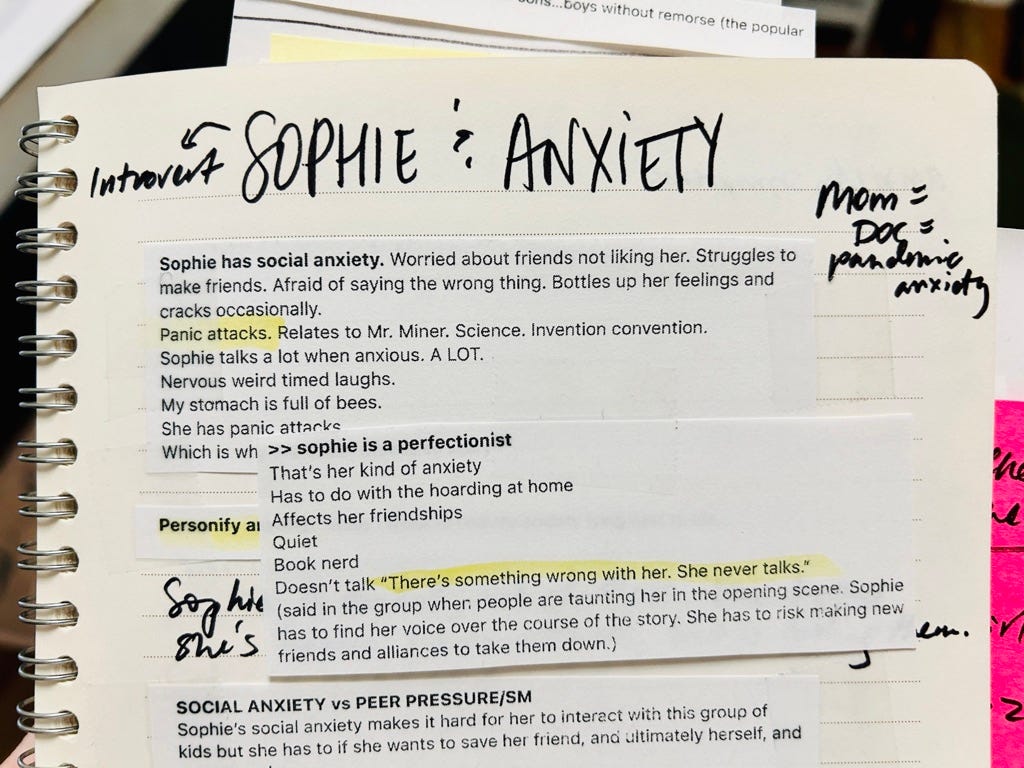
In this way, our characters often inhabit the deepest, darkest parts of our psyches while remaining very separate people from ourselves. It’s okay to let your real life influence your work in this way. That’s how you stay relevant and real for your readers. Will I write a family living in fear of losing their healthcare? Probably not directly, but I already made Sophie’s mom in Crushed into an ER doc who worked through the pandemic, putting her own life at risk and highlighting the stress that situation placed on her family.
It’s no surprise then that stretch marks and divorce make an appearance in my work in progress. Here’s a peek inside my notebook for my next middle grade novel!
