


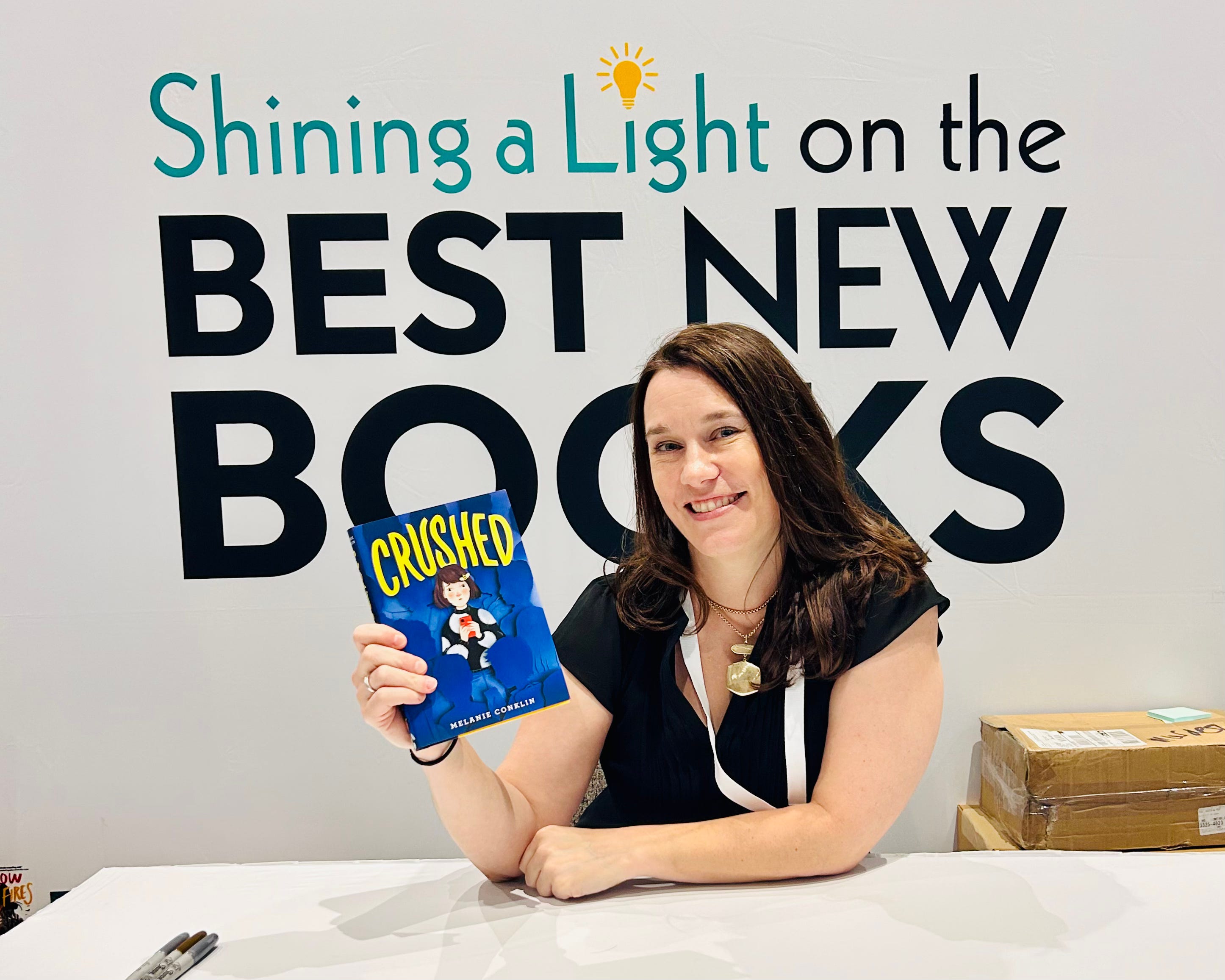
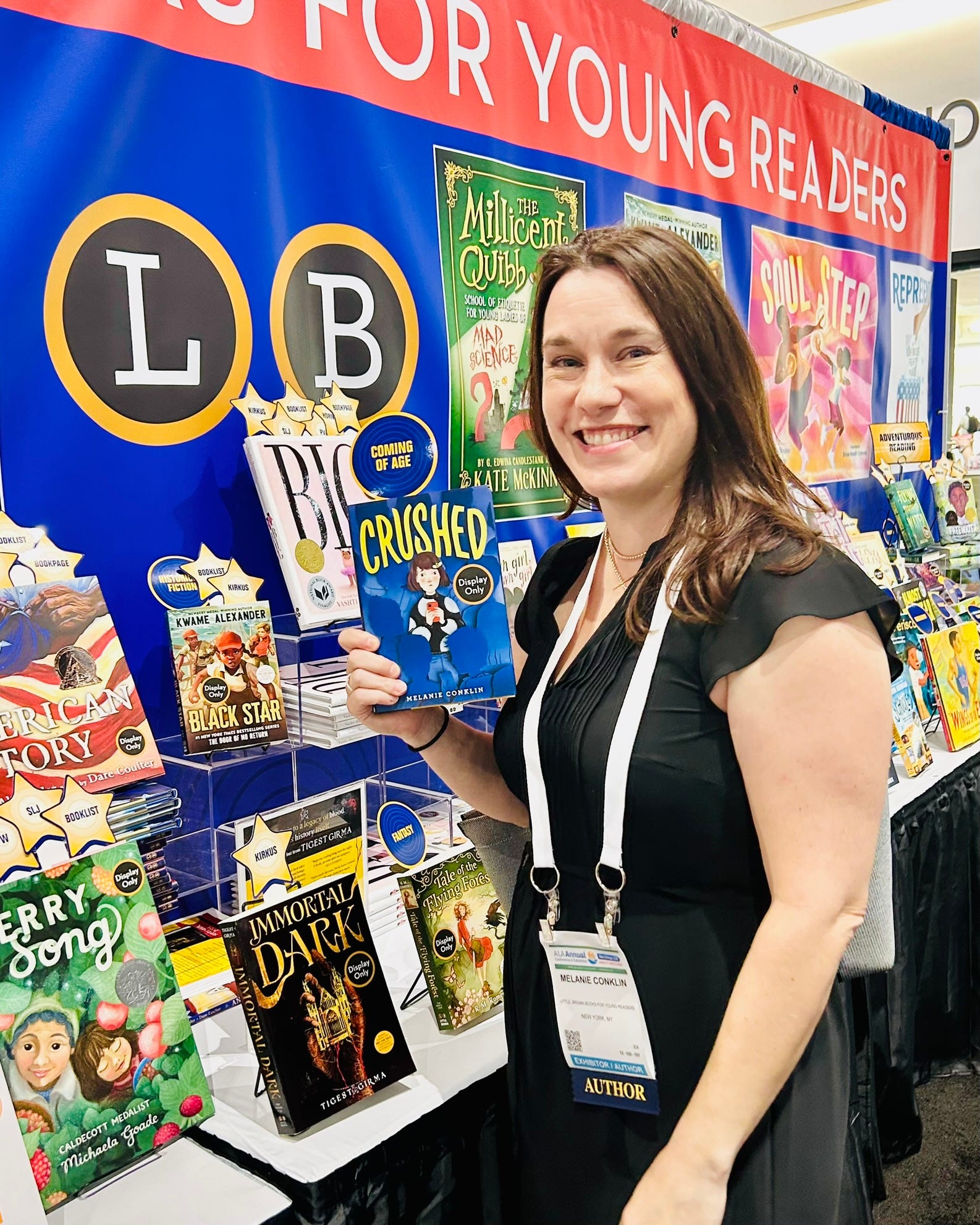
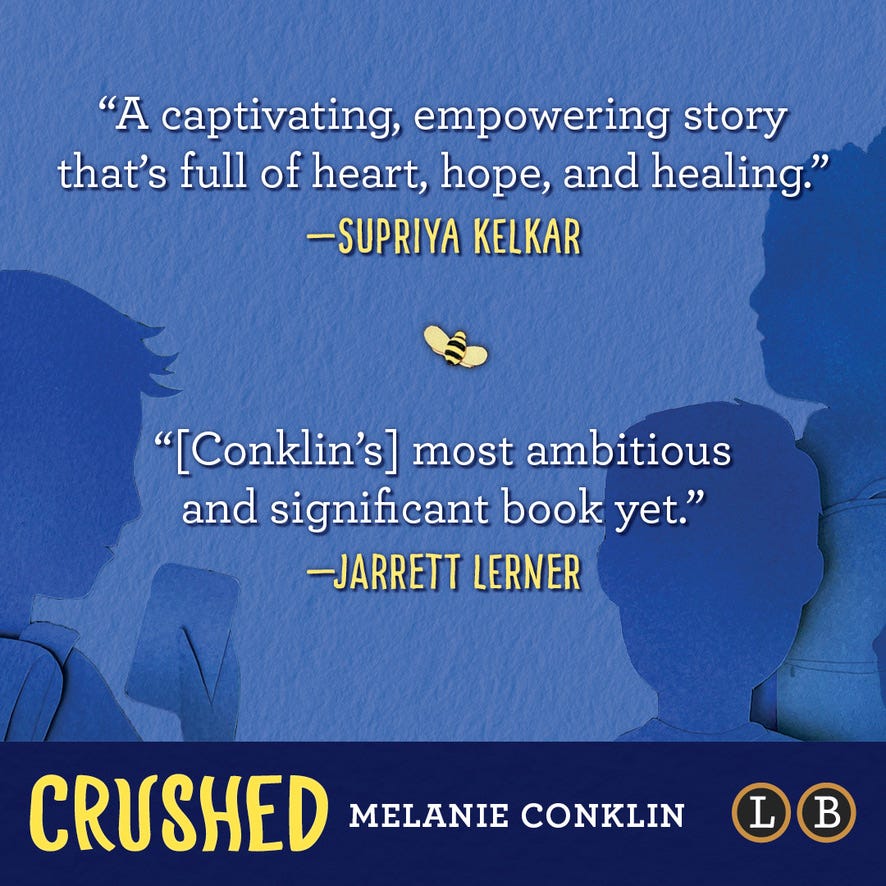
Remember the #metoo movement? It was a social campaign founded by activist Tarana Burke in 2006 that targeted sexual abuse, sexual harassment, and rape culture by encouraging survivors to share their experiences. It became a global social movement by 2017. Around that time, my sons were in middle school and I had a LOT to say about the behaviors I witnessed among kids that age, especially regarding social media use many parents weren’t aware of. I realized young readers needed a book that spoke truth about consent, boundaries, and social media use. So I wrote one. Crushed came out to tremendous critical acclaim, but it has been ordered by fewer schools and libraries across America. This is not pity marketing. This is me calling those people out for avoiding tough conversations. If we don’t talk about sexual harassment with our young readers, how can we protect them from it?
This installment of Mel’s Notebook is emailed to paid subscribers every Thursday. Become a paid subscriber for behind-the-scenes career news, free critiques of your work, and direct Q&A with me as well as a paid subscriber chat and access to my full archives. Subscribe today for exclusive access to support your writing. ❤️
The numbers on sexual harassment in middle school
When I started writing this book, I didn’t even know the numbers on sexual harassment in middle school. Did you know that 48% of middle schoolers experience sexual harassment? In 2017, a report from the American Association of University Women found that nearly half of students in grades 7-12 reported harassment, while only 21% of schools reported incidents.
Did you know that 48% of middle schoolers experience sexual harassment while only 21% of schools reported incidents?
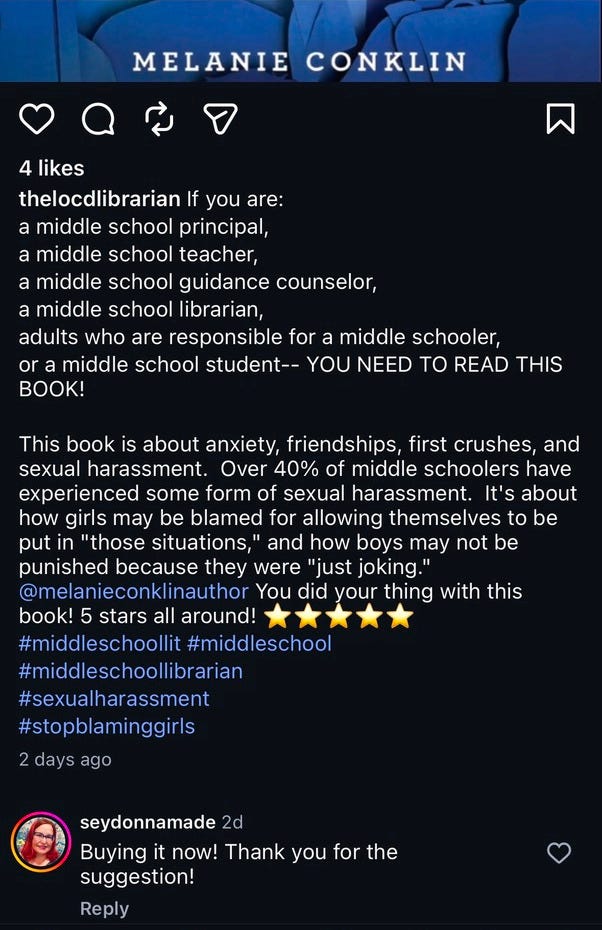
This massive discrepancy indicates we are not doing enough to acknowledge the incidents that happen to students. It is important that we name sexual harassment when we see it. That’s why I wrote Crushed. Books like this one offer a safe place to discuss sensitive topics such as social media, consent, and healthy boundaries. This book has had less reach than my others because of our collective reluctance to confront these topics, but I will not stop talking about them.
Some books are banned softly
Book banning has devastated children’s literature over the past decade. Across America, private interest groups have targeted books that feature diverse characters or were written by diverse authors, often slinging baseless accusations to get these books removed from the shelves.
According to data from the American Library Association, 72% of book censorship demands are initiated by pressure groups, government entities, elected officials, board members, and administrators. Individual parents account for roughly 16% of these attempts, and library users account for just 5%.
So most of the banning you see is politically motivated. It’s not coming from readers or parents. It’s coming from individuals who have a vested interest in controlling what is available for others to read. But that’s not where book banning stops.
Some books are just quietly not ordered.
They are banned softly. Instead of the typical four copies, the library only orders one. Or they don’t order at all. This is happening to marginalized children’s books more than any others, but it also impacts books that talk about topics that make adults uncomfortable. I knew this was a risk when I wrote Crushed, but I wrote it anyway.
And guess what? My sales plummeted.
The impact of censorship on authors
Authors rely on their sales records to secure new books deals. Even though we are not the ones producing or selling the book (which is a product that the publisher owns), we are still held accountable for the sales track for our books.
When your sales dip, it’s much harder to get another contract. That lack of sales can be used against you in negotiations to get you to accept a low ball advance. Negotiations get gross really fast. It doesn’t matter if many of your books have sold well. Having one that dips and doesn’t maintain that trend WILL be used against you.
For many marginalized authors, this potentially means the end of their career. That’s what has happened to a lot of my writer friends over the past year and a half. Publishing has pulled waaaaay back on investing in authors in favor of what they believe will benefit their bottom line. Not that ANYONE knows which books will sell and which won’t—and therein lies the bullshit.
Best sellers are made with investment. When you don’t invest in a book and it fails, that’s not on the author. But that failure is used as an excuse to cull the list to what they deem a “safe” investment: typically straight white people like me.
That’s probably why I still have the opportunity to even try for another book deal right now, which is gross. I want us all to be published based on the merit of our work, but that’s not how this industry works. They publish what they think will SELL, not what they think is GOOD. And with a majority straight white publishing industry, they’re going to gravitate toward people and work they personally relate to.
Hope for the future
Despite the lagging sales for Crushed, which was given a Gold Standard designation by the Junior Library Guild, I am forging ahead with new projects. Unfortunately, the market for realistic middle grade fiction is so poor right now that I can’t sell a book about any of those topics for the time being, but I am still writing truth in the stories I’m working on now.
I know there may be consequences for doing so, but I am in a position of privilege and the least I can do is use it for good. I am grateful for the educators, librarians, and parents who have supported Crushed. I know that they, too, may face consequences for doing so. But these are the lives our young readers a living, and we have a moral duty to be honest about it. Knowledge is power. And middle schoolers need to read about consent. If you have a young reader in your life, please give them this book.

If you enjoy this post, please share it with friends! Or feel free to click the ❤️ button so more people can discover Mel’s Notebook on Substack. Thank you!!! 🙏