


I’ve been thinking about the art of storytelling this week. Often, the writers I work with as a coach and editor have received similar feedback from agents or beta readers: they couldn’t connect with the story. It’s a frustrating bit of feedback that many of us have heard, and it’s frustrating because it doesn’t tell you what to do. It only highlights the reader’s inability to connect emotionally to the work. Sometimes, that’s because your story isn’t a good fit for that reader, but other times, it’s because the story isn’t being presented in a manner that captures their imagination.
This installment of Mel’s Notebook is emailed to paid subscribers every Thursday. Become a paid subscriber for deep dives into my notebooks, writing practices, and personal projects. Subscribe today for exclusive content to inspire your creativity. ❤️
The plot of a story is a sequence of events. It’s the meat of what actually happens, but there is a difference between telling a reader what happens and telling them a story. Stories are artfully arranged. They are crafted by the author very intentionally. Stories utilize writing craft to provoke emotions in the reader, because ultimately, the key to keeping someone reading your story is connecting to them emotionally.
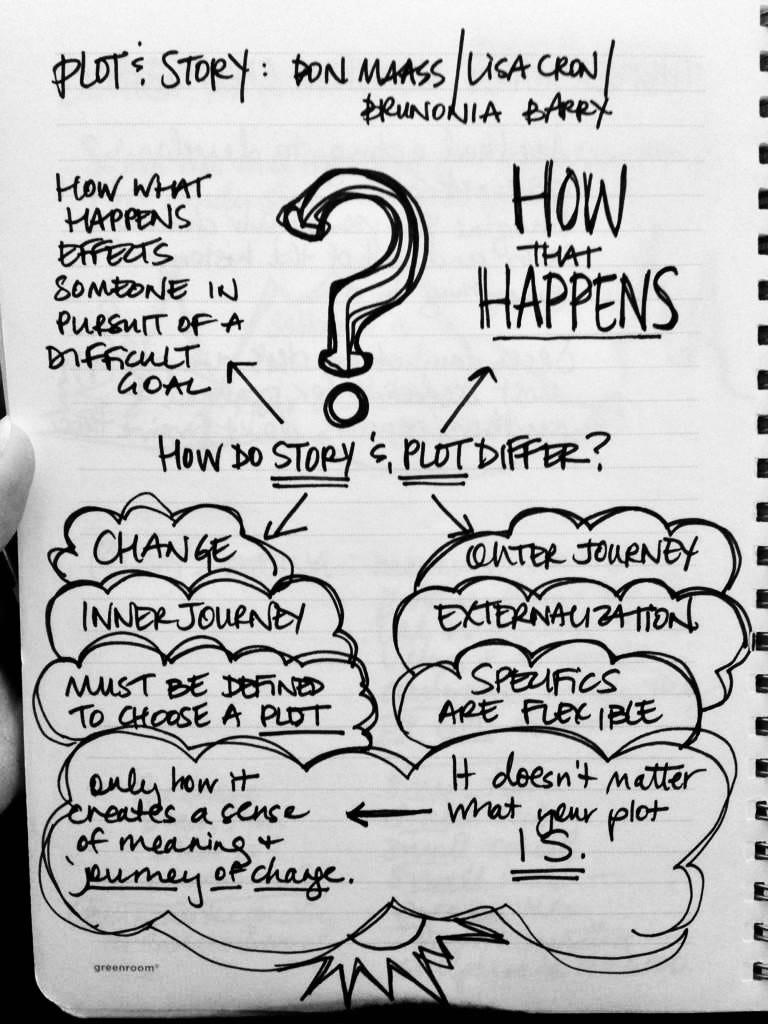
I took this page of notes many years ago at a Writer Unboxed conference where Donald Maass, Lisa Cron, and Brunonia Barry discussed the difference between story and plot. The plot is what happens, but the story is how what happens EFFECTS someone in pursuit of a difficult goal. The plot is the outer journey. The story is the inner journey. Story is the change that happens in your character. It is how they grow…and yet, even when we have our character’s transformation mapped out, the story can fall flat. How do we connect the character’s story to the reader’s heart?
