


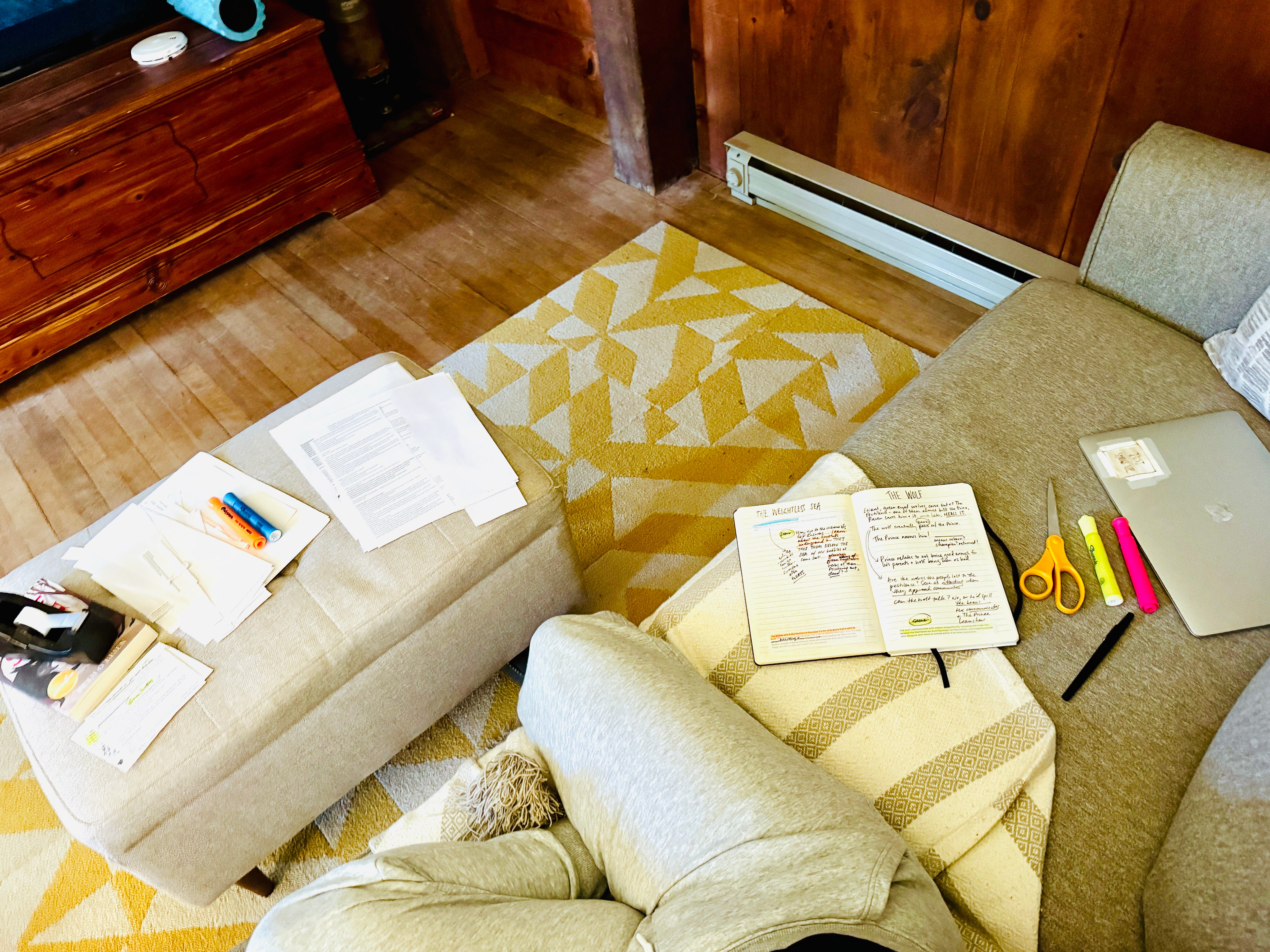
When we first start creating a story, it’s thrilling, The excitement of new worlds and new characters spurs you forward, but that early momentum doesn’t last forever. As the story grows, it can become overwhelming. Books are long and complicated, so even the sharpest minds can struggle to hold all of the pieces at once. You need systems to sustain the work. I’ve been forced to develop mine so I can get a draft done in a reasonable amount of time. While each person’s process is different, I have figured out a few things that help me get from idea to completed draft.
This installment of Mel’s Notebook is emailed to paid subscribers every Thursday. Become a paid subscriber for behind-the-scenes career news, free critiques of your work, and direct Q&A with me as well as a paid subscriber chat and access to my full archives. Subscribe today for exclusive access to support your writing. ❤️
Remove constraints early on
It’s tempting to try to organize your thoughts early in your writing process, but trying to make decisions while you are in the midst of expansion into new ideas can shut down your creative flow. For years, I tried to stay organized WHILE I brainstormed, and it just made me tire and work slowly. I was constraining myself unnecessarily. That urge to organize is a good one, but it needs to be done at the right time.
Early work on a book is not that time for me.
When I let myself have free range and follow my ideas with no concern other than collecting and documenting them, I get more done. Is it chaos? Often. But are the ideas better? Very much.
When we’re in the midst of creating, we need to surround ourselves with YES energy. YES, that’s a great idea. YES, it might work that way. YES, there is a solution. All of that YES energy propels you forward through the maelstrom of your ideas and trusting your future self to handle organizing it all frees you from constraints.
Use intuitive processes as you work
I was the kind of kid who hoarded art supplies. My parents were nice enough to get me a lot of beautiful markers and pencils and sketchpads. Years later, I found many of them virtually untouched in my closet. It made me sad for little Mel. I wish she had just torn through those supplies with reckless abandon.
I’ve encountered the same hesitation to waste materials holding me back at times when I’m writing. I worry about wasting paper and fret over burned-out pens, often continuing to write with one that’s hurting my fingers because it’s so nearly dead. I’ve tried using the computer more instead, and it’s just not the same for me.
I need to use the processes that are intuitive to my brain without restriction. Every time I allow myself to have this freedom, I am more productive. I’ve also found ways to compromise with those parts of myself by using scrap paper and asking my local Buy Nothing group for paper people would otherwise trash. This allows me to think the way that’s easiest for me without fretting quite as much.
Make it fun
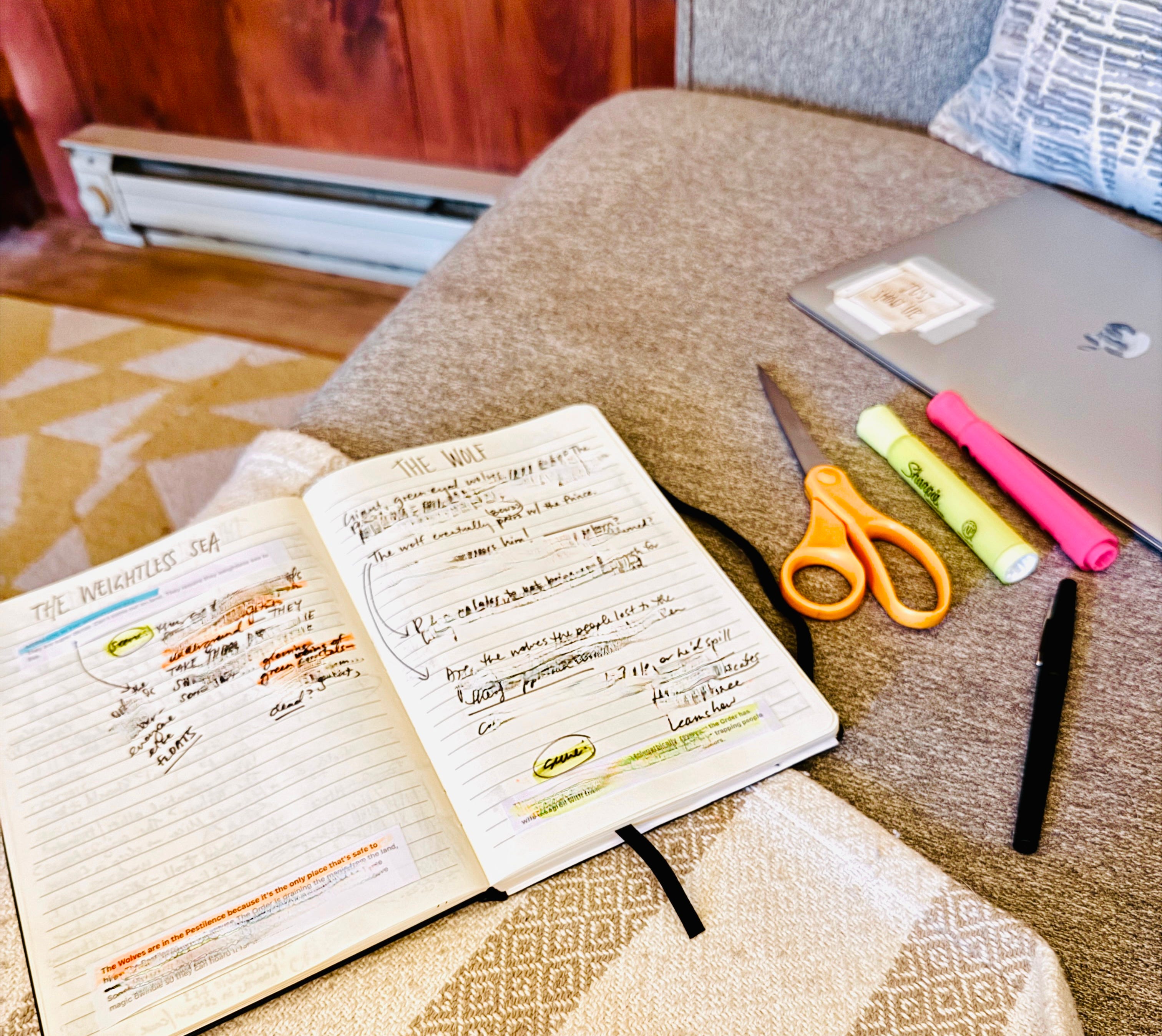
If you’re struggling with any part of the creative process, ask yourself how you can make it more fun. For me, that usually means adding markers, tape, and scissors to whatever I’m doing. Sometimes it means voice notes to myself, which are very effective and often comical. Basically, if I notice myself hating what I’m doing, I ask myself how I could switch up my environment, materials, or method to spark joy.
This is especially useful when you are organizing a bunch of early ideas into an actual story. How I make that process fun:
I let myself spread out and make piles that are fun to build as I get the work done.
I add colors that make me smile and make it easier to locate what I need
I allow myself to cross out things I don’t need or leave little comments when I agree or disagree with my past self. This takes the pressure out of decisions and lets them be an ongoing conversation.
I use exclamation points, underlines, and circles to indicate important breakthroughs. There is something ingrained in my psyche from childhood that seeing a star means I did good, and I can give that to myself.
I get a real dopamine blast from COMPLETION so I break my process into the smallest parts so I can finish them in a session. It’s helpful to note when something is a problem to solve NOW and when it should wait for LATER.
I leave the mess. When I had little kids, I made myself clean everything up every time I worked but now that my space is safe for mess, I don’t clean up after myself. This work is important and it deserves to be present in my living space. It is beautiful to look at and leaving it out brings me joy.
Try different systems
It can take a while to figure out what works for you, so let yourself try different systems to organize your ideas into a draft. Some people like spreadsheets. Some like mood boards. Some like very detailed outlines. Some prefer to let go and write with periodic check-ins to stay on track. Anything goes!
Your needs might also change over time, so stay open to trying things you didn’t like in the past. I work on paper to organize my notes but I also use Word to create an outline of those notes. I mark those notes those with word “SCENE” to come back to later.
When I’m done organizing my notes, I copy the scene ideas into a Word doc and put them in rough order. This results in a loose outline that I can expand into chapters. I allow myself to write those scenes and chapters completely out of order, something I didn’t like early on. These days, it’s more satisfying to write the scene I’m most excited about at any given moment. It will all get revised later, anyway. Might as well take the easiest path forward. Eventually, this process leads to a finished draft.
